

For buyers
Powertrust contracts new-build solar across Latin America, Africa and Asia, in the markets where your demand is growing, your operations sit or your supply chain runs, and delivers it to you as verified, additional I-RECs under one agreement.
Who this is for
Scope 2 for offices, plants and retail across markets where there is no green tariff worth signing, under one contract instead of a procurement in each country.
Your supply chain is in Vietnam, India and Ghana. Your clean electricity can be too: Scope 3 contracted in the country where the factory is, and reported against the load that sits there.
Scope 2 for cloud regions where capacity is being added faster than clean supply, in Johor, Batam, Querétaro and Hyderabad among others, and where new-build distributed projects are what can be contracted now.
Downstream Scope 3 in the countries where the devices are used, matched with supply in the same countries.
What you get
New-build, I-REC certified supply that qualifies under RE100, SBTi and the GHG Protocol market-based method.
Powertrust signs as principal, for a 5 to 20 year term at a fixed USD price.
Per-project generation, registry retirement and verified community outcomes, delivered as a report. A sample is available on request.
Supply in the same country as your load, as RE100 requires.
REI, whose manufacturing is in Southeast Asia, described its agreement with Powertrust as “reducing manufacturing emissions in the same countries where it is occurring.” That sentence is the test for every contract we sign: the supply sits where the load sits.
Already a Watershed customer? Powertrust supply is available through the Watershed platform.
Compared with the alternatives
| Powertrust contract | Corporate PPA | Utility green tariff | Spot I-RECs | |
|---|---|---|---|---|
| New-build | Yes. Projects are contracted before construction. | Yes, for a single large project. | Rarely. Usually existing supply on the grid. | No. Certificates from projects already operating. |
| Available in emerging markets | 23 countries contracted; sourcing across 70+. | A handful of markets, one country per deal. | Where the utility offers one. | Where a registry exists; volume varies. |
| Term | 5 to 20 years, fixed USD price. | 10 to 20 years. | Annual. | Spot. |
| Contracts to sign | One, with Powertrust as principal. | One per project per country. | One per utility. | One per purchase. |
| Reporting | Per project, per MWh, with registry retirements. | Per project. | Utility statement. | Registry statement only. |
| Fits a buyer whose load is | Spread across many countries, including ones with no PPA market. | Concentrated in one liberalised market. | In a market with a credible tariff. | Small, or a top-up for the current year. |
A Powertrust contract delivers certificates, not physical power; the electricity is consumed where it is generated. Buyers with a liberalised market and a large single site often sign a PPA there and use Powertrust for everywhere else.
How we select projects
Whether our purchase decides if the project gets built: we model its IRR and NPV with and without a Powertrust contract, and favour new-build projects that can be financed against one.
The country matches your load, and within it we look at how close the project is to your operations, how much a clean megawatt-hour avoids on that grid, and whether the region is one where little clean-energy development is happening.
The fuel displaced, the emissions avoided and the outcomes the project supports against the UN SDGs, which together with the first two set the price we offer the developer.
Every project is then metered and verified before any certificate is issued. How verification works.
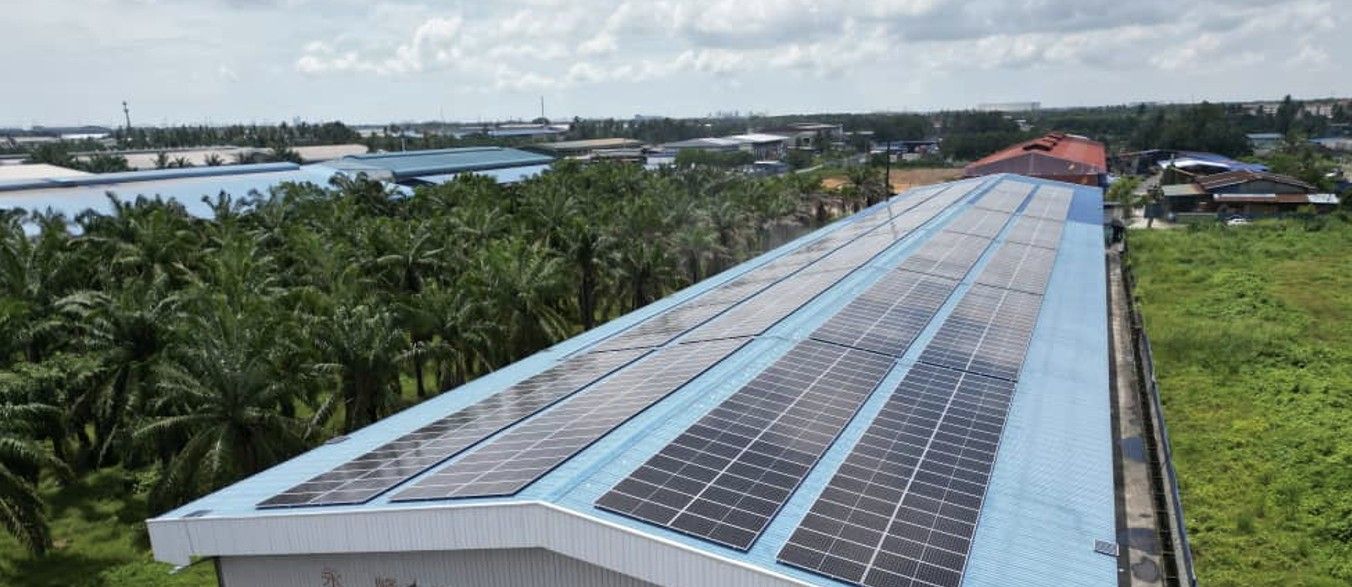
Why these countries
Manufacturing has moved to Vietnam, Indonesia, India and Mexico, and data-centre capacity is following it. In most of those markets there is no corporate PPA to sign and no green tariff worth the name, while RE100 and the GHG Protocol require the supply to sit in the same market as the load. Salesforce estimated in 2023 that nearly 95% of corporate renewable purchases were still in North America and Europe. The same megawatt-hour also avoids several times the emissions it would in the US or EU, by the IFC's estimate.
Sources: Salesforce newsroom, 14 Feb 2023; IFC, The Dirty Footprint of the Broken Grid.
Questions buyers ask
No. D-RECs are issued under existing internationally recognised standards, the first of which is the I-REC Standard. The D-REC label records that the certificate came from a distributed project with verified generation data.
An international attribute-tracking standard for electricity, run by the I-TRACK Foundation and used in more than 50 countries that have no national certificate scheme of their own. Each I-REC represents one MWh of generation, is issued once against metered data, and is retired in the registry when a buyer claims it.
An accredited local issuer in each country, under the I-REC Standard, on the registry operated by Evident. Powertrust sends metered generation data to the issuer; the certificates are issued against it and retired in the buyer's name.
The Scope 2 Guidance's market-based method lets a company report the attributes of electricity it has contracted for, provided the instrument meets the quality criteria: one claim per MWh, issued and retired in a registry, and from the same market as the load. Powertrust contracts are built to meet them in every country we supply. The claim they support reads, for example: "100% of our electricity use in Vietnam is matched with I-RECs from new-build solar projects in Vietnam, retired on our behalf."
Yes, Watershed customers can contract Powertrust supply through the Watershed platform. Delivery reports come from Powertrust, as they do for every buyer.
No. Agreements range from a few thousand megawatt-hours a year to multi-year portfolios in the hundreds of megawatts.
They carry the environmental attributes of the generation in a form recognised by the GHG Protocol market-based method, RE100, SBTi and CDP. They are used against Scope 2 for your own operations and against Scope 3 where the load sits in your supply chain or with your customers.
Yes. Buyers name the countries and, where they want, the project types and community outcomes. Every delivery report lists the projects, their generation and the registry retirements behind it.
Active supply in 23 countries across Latin America, Africa, South and Southeast Asia, with open requests for projects in twenty of them, and the ability to source across the 70+ countries where I-RECs are issued. See the current list.